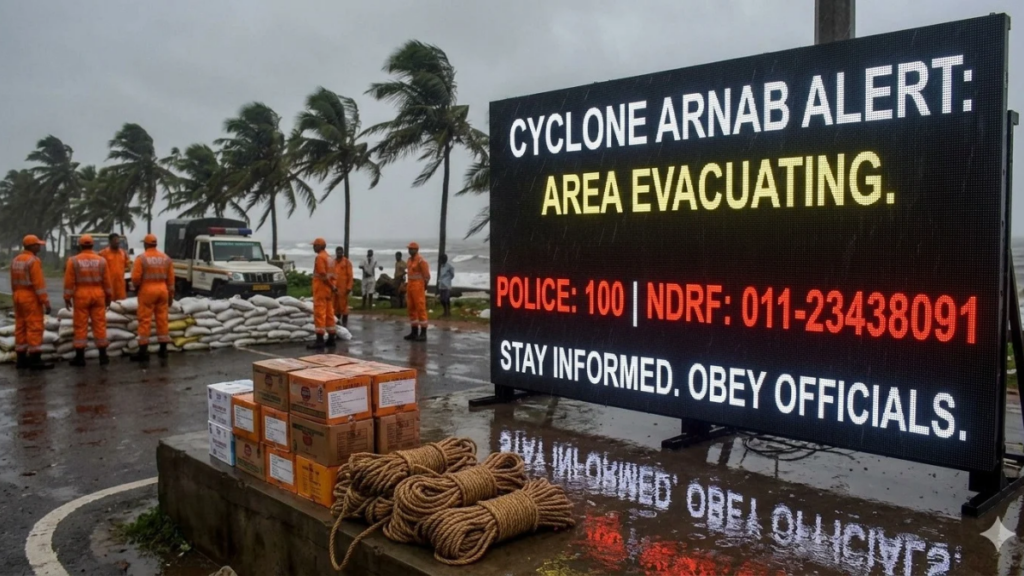
Cyclone set to make landfall along the north Andhra & Yanam coastal stretch—specifically between Bapatla and Visakhapatnam—on the morning of Oct 28, 2026.
Key Details & Path
- Name & Meaning: Contributed by Bangladesh, the name “Arnab” means ocean or sea. It is the first cyclone to form in the Bay of Bengal in 2026.
- Landfall Forecast: The India Meteorological Department (IMD) projects maximum sustained winds of 115–125 km/h, gusting up to 140 km/h.
- Affected Regions:
- Andhra Pradesh: Red alerts cover districts including Visakhapatnam, Kakinada, Konaseema, Eluru, NTR, Krishna, Guntur, and Yanam.
- Odisha: Heavy to very heavy rainfall is warned between October 27 and 29, with peak impact on October 28.
- West Bengal: Kolkata and southern districts expect gusty winds and showers starting Tuesday, peaking through Wednesday and Thursday.
Exclusive Analysis of Preparedness & Official Measures
- Evacuations & Closures: Thousands of residents in vulnerable coastal zones are being relocated to safer shelters, and schools/colleges have been ordered shut in vulnerable districts (such as parts of Odisha and Andhra Pradesh).
- Disaster Response Teams: Odisha has deployed 60 Odisha Disaster Rapid Action Force (ODRAF) and 17 National Disaster Response Force (NDRF) teams with a zero-casualty target under Chief Minister Mohan Charan Majhi. Andhra Pradesh power distribution companies (APEPDCL, APCPDCL, APSPDCL) have mobilized emergency crews, poles, generators, and dewatering pumps.
- Restrictions: Fishing is completely prohibited, and tourist access to vulnerable coastal areas is restricted. The emergency power helpline is 1912.
Cyclones Don’t Just Destroy Homes. They Disrupt Economies.
Risks & Disaster Management Lessons
- Primary Hazards: Extreme rainfall, flash floods, storm surges, coastal waterlogging, uprooted trees, and infrastructure damage.
Core Lessons: Early tracking and pre-landfall mobilization (such as shifting pregnant women near delivery to hospitals, pre-positioning power repair teams, and clear communication via toll-free lines) drastically minimize human casualties compared to historical storms.
📞 1. Emergency Contact Numbers
Universal Pan-India Numbers
- National Emergency Number: 112 (Single number for Police, Fire, and Ambulance)
- NDRF Helpline: 011-23438091 or 011-23438136
- Disaster Management Helpline: 1070
🎒 2. How to Assemble a Cyclone Emergency Kit
Pack these items in a tough, waterproof backpack or a plastic container that is easy to carry if you need to evacuate.
💧 Survival Essentials (Pack for at least 3 days)
- Bottled Water: 3–4 litres per person per day (for drinking and basic hygiene).
- Non-Perishable Food: Dry fruits, biscuits, roasted chana, chura (flattened rice), jaggery, and canned goods (with a manual can opener).
- First Aid Kit: Antiseptic liquid, band-aids, gauze, burn cream, ORS packets, and a 14-day supply of personal prescription medicines.
⚡ Power & Communication
- Power Banks: Fully charged to keep your mobile phones functional.
- Flashlight / Torch: With extra sets of fresh batteries (avoid candles due to fire risks during high winds).
- Battery-Operated Radio: Essential to listen to local IMD weather bulletins if cell towers go down.
📄 Document & Asset Protection
Waterproof Document Pouch: Store your Aadhaar cards, passports, insurance papers, property deeds, and medical records.
- Emergency Cash: ATM networks and digital payment systems (UPI/net banking) often fail during power outages. Keep small denominations handy.
👕 Personal Care
- Clothing: A change of dry clothes, a rain jacket or poncho, and sturdy, sturdy shoes.
- Hygiene Items: Hand sanitizer, soaps, sanitary pads, and wet wipes.
Satyam Shivam Sundaram
सत्यं वद । धर्मं चर । राष्ट्राय समर्पित भव ।
Truth. Righteousness. Dedication to the Nation.